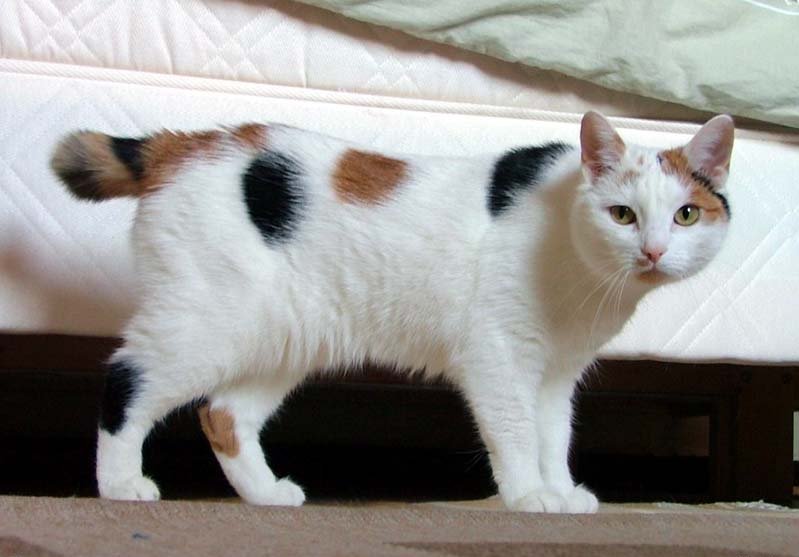
How long do Manx cats live?
10–14 years is the typical range. 10–14 years is the expected range for this breed (PetMD breed profile). Individual cats vary — lean body weight, dental care and regular checkups move the number more than anything else.
Personality & temperament
- High-energy; daily interactive play is a requirement, not a bonus
- Affectionate with their family once trust is built
"A Manx in repose is so round and cobby that it is jokingly called a "bowling ball with fur." But remember—bowling balls roll!" — CFA official breed profile
Do Manxes need a lot of grooming?
Wavy or rex coats shed less than typical shorthairs but still need gentle grooming. A simple weekly routine covers most of it.
Health notes for Manxes
The CFA breed profile discusses health considerations for this breed; review it with your breeder and vet. Every cat, purebred or not, needs: annual vet exams (twice-yearly after age 7), dental care, parasite prevention, weight watching, and vaccines on your vet’s schedule.
Is a Manx right for you?
Generally good with respectful children — interactions still need supervision, and kids must learn gentle handling. Cats are obligate carnivores: they must get certain nutrients (taurine, arachidonic acid, preformed vitamin A) from animal tissue, so a complete, balanced cat food should always be the base of the diet.
Before adopting, read the cat care library — and consider that adult shelter cats also "come in breed-ish packages" without the breeder price tag.
People also ask about Manx cats
How long do Manx cats live?
Manx cats typically live 10–14 years. 10–14 years is the expected range for this breed (PetMD breed profile). Indoor life, lean weight and routine vet care are the biggest longevity levers owners control.
Do Manxes shed a lot?
Shedding: Wavy or rex coats shed less than typical shorthairs but still need gentle grooming.
How much do Manxes weigh?
Breed-specific published weight data is limited — most adult domestic cats weigh between 8 and 12 lb, and your vet can tell you where your cat sits on the healthy curve.
Are Manxes good with kids?
Generally good with respectful children — interactions still need supervision, and kids must learn gentle handling.
Are Manxes friendly with strangers and other pets?
High-energy; daily interactive play is a requirement, not a bonus. Slow introductions and vertical space (cat trees, shelves) make multi-pet homes smoother.