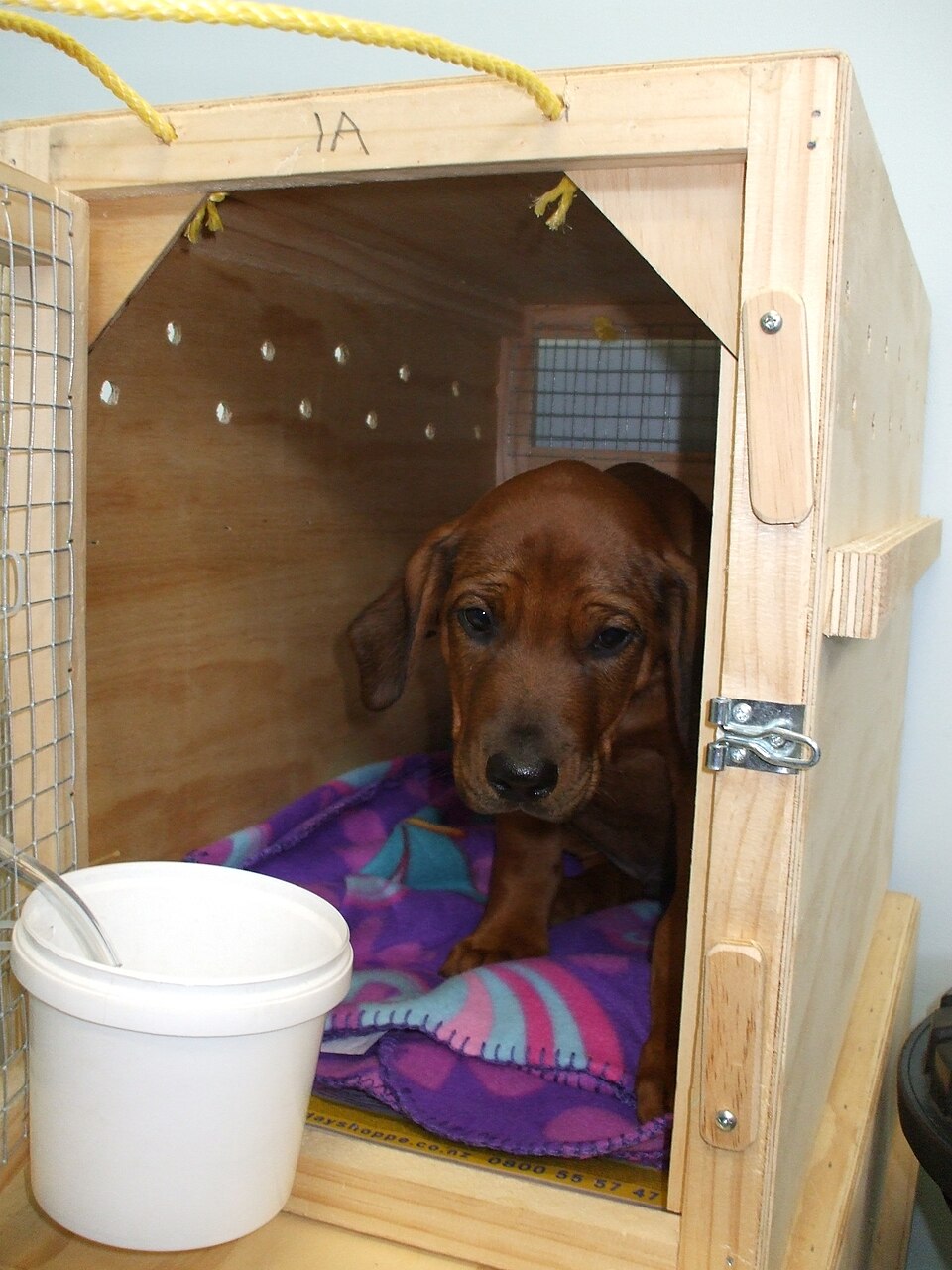
Why crates work (and when they don't)
Dogs have a natural denning instinct, and a crate gives you three practical things: a safe place when you cannot supervise, the fastest route to house-training (dogs avoid soiling their sleeping area), and a portable quiet space for travel and vet recovery.
It stops working the moment the crate becomes a punishment, or the moment a puppy is left in it longer than their bladder and social needs can bear. Both are the two routes to a dog who screams in the crate.
Set it up right
- Size: big enough to stand, turn around and lie down comfortably — but not so big that one end becomes a toilet. Use a divider panel and expand it as your puppy grows.
- Location: in the room where the family actually is, especially at night for the first weeks. Isolation is what makes nights hard.
- Inside: a comfortable bed, one safe chew, and — at first — an old t-shirt with your scent. Remove anything your puppy shreds.
- Never as punishment. If the crate is where they go when they are in trouble, they will never settle in it.
The five-day ramp
- Day 1 — door open, food only. Every meal goes in the bowl at the back of the crate, door never shut. Let them come and go freely.
- Day 2 — door closes for seconds. While they are eating, close the door, open it the moment they finish. Repeat, adding a few seconds each time.
- Day 3 — up to a minute, you stay in the room. Use a long-lasting chew. Do not open the door for whining — wait for a pause, then reward quiet.
- Day 4 — you leave the room for short trips. Build from 30 seconds to a few minutes. Come back before they start to fret, not after.
- Day 5+ — naps and nights. Puppies sleep 18–20 hours a day; crate naps prevent the overtired biting that owners mistake for bad behavior.
How long is too long?
A rough guide: a puppy can hold their bladder for roughly their age in months plus one hour — three months old is about four hours, and that is an absolute ceiling, not a target. No dog should spend a working day in a crate. If you are out for longer, combine a crate with a puppy-proofed pen, a midday visit, or a trusted walker.
The first nights
Put the crate beside your bed for the first week or two and put your hand on it if they fuss — the point is to reassure, not to negotiate. Take them out for a boring, silent, strictly business toilet trip, then straight back in. Most puppies settle within a few nights; crying that goes on beyond that, or a puppy who cannot settle at all, is worth a call to your vet.
Frequently asked questions
How do I crate train a puppy?
Feed every meal in the crate with the door open, then close it for seconds, then minutes, then short absences. Always reward quiet, never open the door for whining, and never use the crate as punishment.
How long can a puppy stay in a crate?
Roughly their age in months plus one hour, as an absolute ceiling — about four hours at three months old. Never a full working day.
Should I ignore my puppy crying in the crate at night?
Not completely. Check they do not need the toilet, reassure briefly, then wait for a pause in the crying before opening or rewarding. Distinguish 'I need the toilet' from 'I want company'.
Is crate training cruel?
Used properly — short, positive, never as punishment — most dogs come to choose their crate as a place to sleep. Used for long daily confinement, it is a welfare problem.