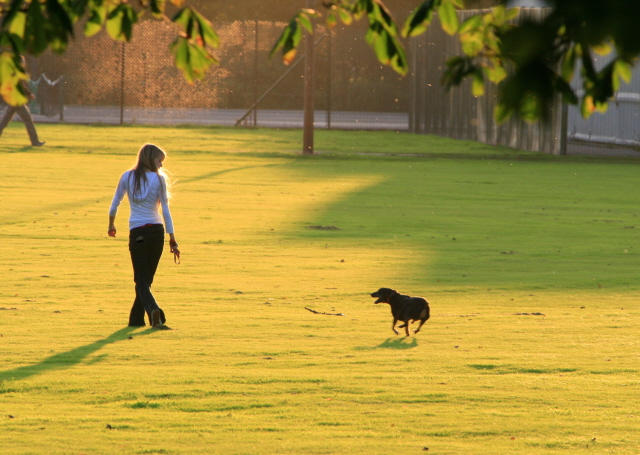
Fix the equipment first
A flat collar puts all the pressure on the throat and windpipe — dogs brace into it, which is exactly the wrong reflex. Use a front-clip harness (the lead attaches at the chest) or a well-fitted back-clip harness plus a 6-foot non-retractable lead. Skip retractable leads for training: a constantly taut line teaches pulling. Head halters work well for strong pullers but need careful, gradual introduction.
The method: be a tree
- The moment the leash tightens, stop moving. No pulling back, no correction — just stop. You are a tree.
- Wait for slack — even a fraction. The instant the line loosens, say your marker ('yes' or a click) and walk on.
- Pay for position, not just slack. Treat at your knee regularly while your dog is walking nicely, before the leash ever goes tight. Most owners only reward after the pull, which is backwards.
- Short sessions, easy environments first. Practise in the garden or a quiet street; the park full of squirrels is the final exam.
- Let them sniff. Walks are for dogs, not for marching. A scheduled sniff break on a longer line satisfies the reason most dogs pull in the first place.
How do I stop my puppy pulling on the leash?
Start before the habit forms. Puppies pull partly because the world is new and partly because a tight human is a thing to escape from. Keep sessions to 5 minutes, reward heavily for any check-in with you, and never drag — a puppy who learns that the lead means being hauled will brace for life. Practise indoors and in the garden first, where you are the least interesting thing in the room and you can win.
What not to do
- Don't yank or jerk the lead. Beyond the neck and spine injury risk, opposition reflex makes many dogs pull harder into pressure.
- Don't use prong, choke or shock collars for pulling. They suppress the symptom with pain or fear and carry real fallout — a dog who stops pulling because pulling hurt is not a dog who has learned to walk nicely.
- Don't expect it in a week. Loose-leash walking is genuinely one of the harder skills; most dogs need consistent practice over several weeks.
Frequently asked questions
How do I stop my dog pulling on leash?
Use a front-clip harness, stop dead the moment the leash tightens, and reward slack and position at your knee. Never pull back — reward the behavior you want instead.
How do I stop my puppy pulling on the leash?
Short 5-minute sessions, practice indoors first, reward every check-in, and never drag them. Build the habit before the pulling becomes the default.
Do harnesses stop pulling?
A front-clip harness reduces the pulling force and redirects your dog back toward you, which makes training much easier. It is a tool, not a cure — the stop-and-reward method is what changes the behavior.
How long does it take to teach loose-leash walking?
Most dogs need several weeks of consistent, short sessions. Expect quick progress in quiet environments and much slower progress around real distractions.