Dog Training: How to Actually Fix the Thing That's Driving You Crazy
Eight of the most-searched training problems, one page each. No "alpha" nonsense, no shock-collar shortcuts — the method that works, the timeline you should expect, and the point where this stops being a training problem and becomes a vet problem.
Photo: File:Ford B2787 NLGRF photo contact sheet (1977-01-15)(Gerald Ford Library).jpg by White House Photographic Office (WHPO) - Thomas, Public domain via Wikimedia Commons. Believe an image infringes your rights? Report it — we remove within 24 h.
Most bad first meetings are the same mistake: face-to-face, on leash, in a doorway. Do it side by side on neutral ground and the odds flip in your favor.
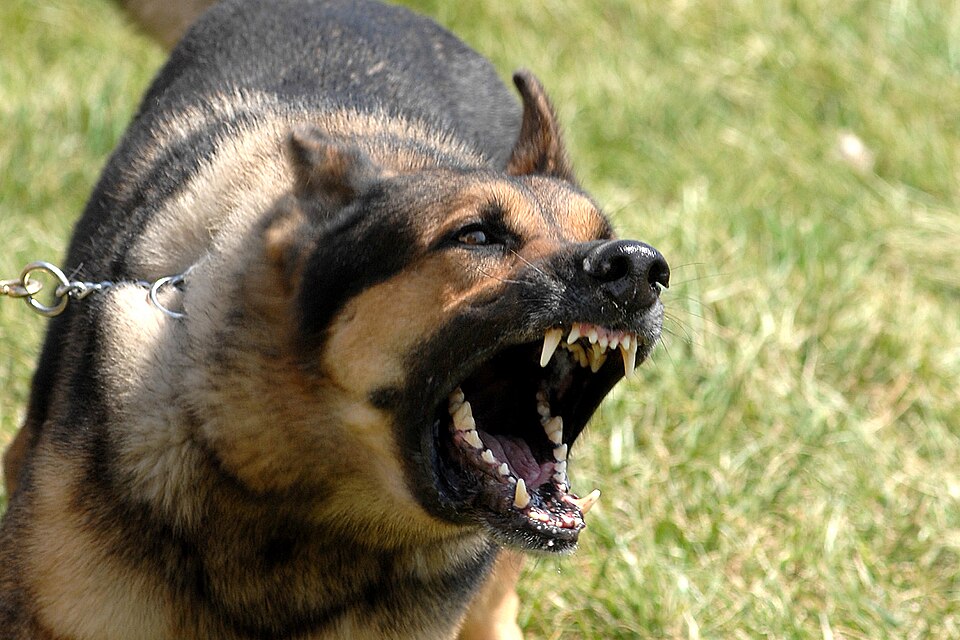
Photo: File:Military dog barking.JPG by U.S. Air Force Photo by Josh Plueger, Public domain via Wikimedia Commons. Believe an image infringes your rights? Report it — we remove within 24 h.
Barking is not a behavior problem, it is a symptom with about six possible causes. Punishing the bark without finding the cause is why so many 'fixes' fail.

Photo: File:Madam (7202313810).jpg by Eva Rinaldi, CC BY-SA 2.0 via Wikimedia Commons. Believe an image infringes your rights? Report it — we remove within 24 h.
Before you assume it is a training problem, rule out the medical one — urinary infections and marking are the two most common reasons a house-trained dog starts again.
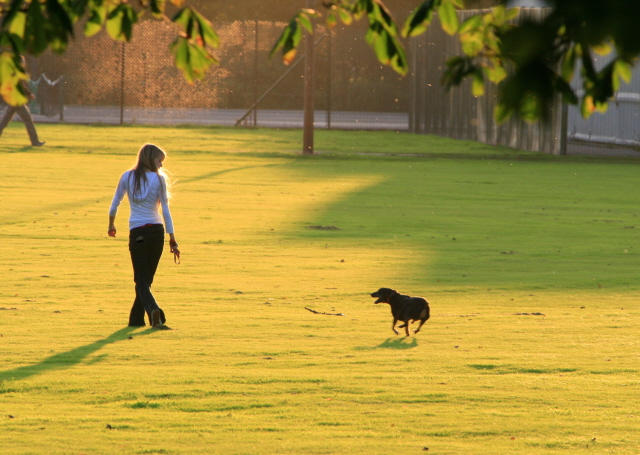
Photo: File:Dog walking in West Park - geograph.org.uk - 998126.jpg by David Lally, CC BY-SA 2.0 via Wikimedia Commons. Believe an image infringes your rights? Report it — we remove within 24 h.
Pulling works because it gets your dog where they want to go. Stop rewarding it, reward the loose leash instead, and use equipment that does not fight their shoulders.
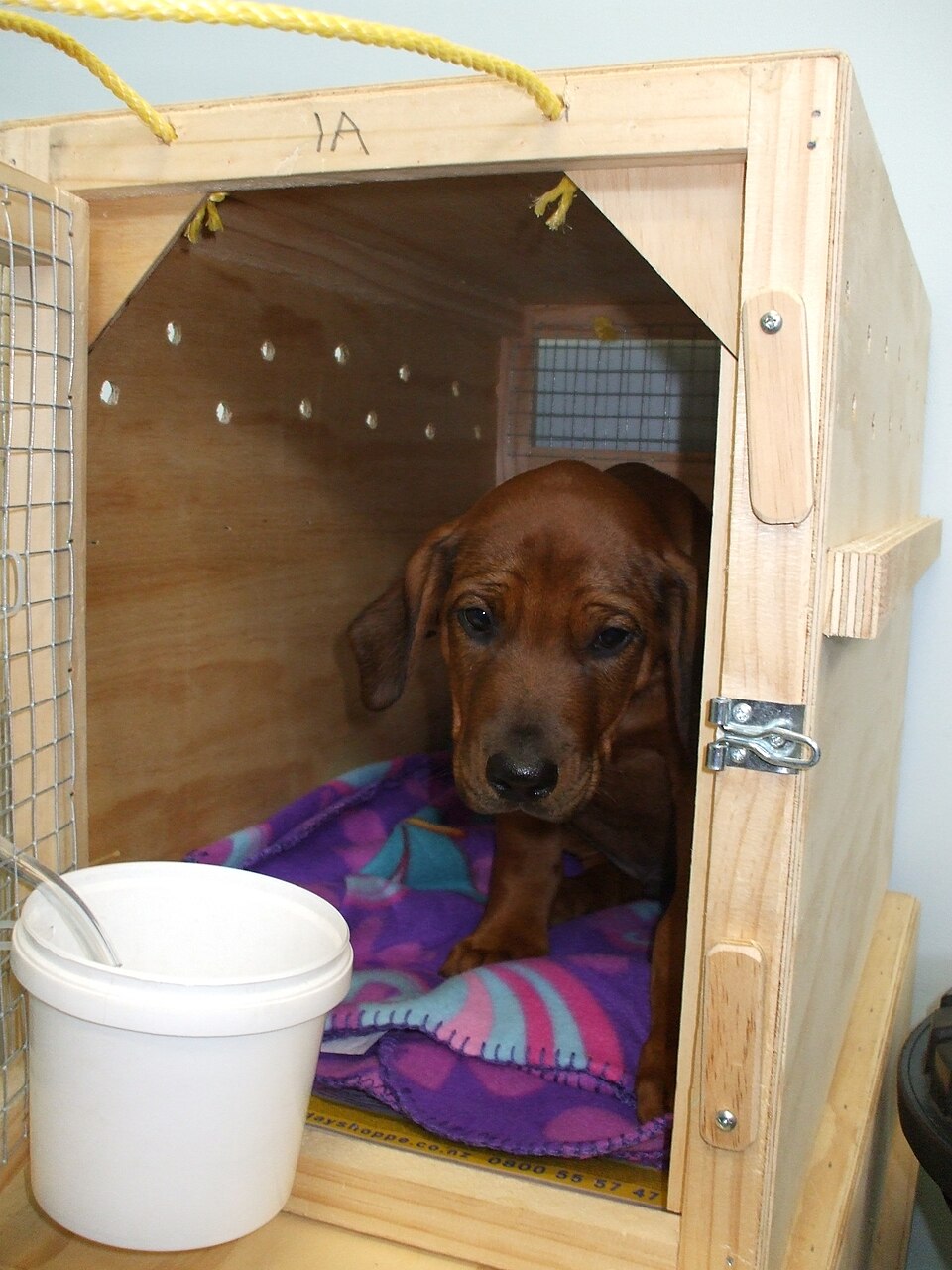
Photo: File:Dogtainers Pet Transport Dog Cage Travel Crate Labrador Puppy.jpg by Chachacha369, CC BY-SA 3.0 via Wikimedia Commons. Believe an image infringes your rights? Report it — we remove within 24 h.
Used properly, a crate is a den and a house-training accelerator. Used as a timeout box or left too long, it becomes the reason your puppy hates it.
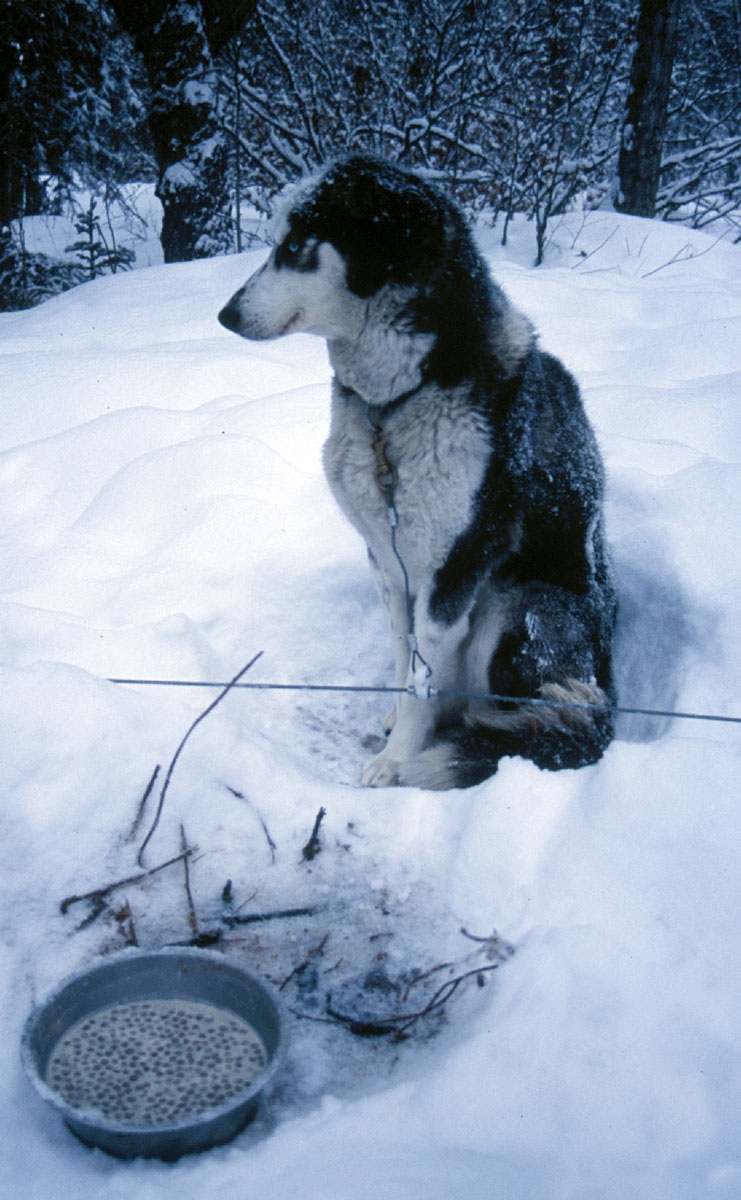
Photo: File:Before and after the run, dogs get kibble soaked in hot water. (8ad5eba1-1dd8-b71c-07ac-69812134ef6e).jpg by NPS Photo, Public domain via Wikimedia Commons. Believe an image infringes your rights? Report it — we remove within 24 h.
Most puppies are fully on dry food between seven and eight weeks — but they get there through a gruel, not by being switched cold.
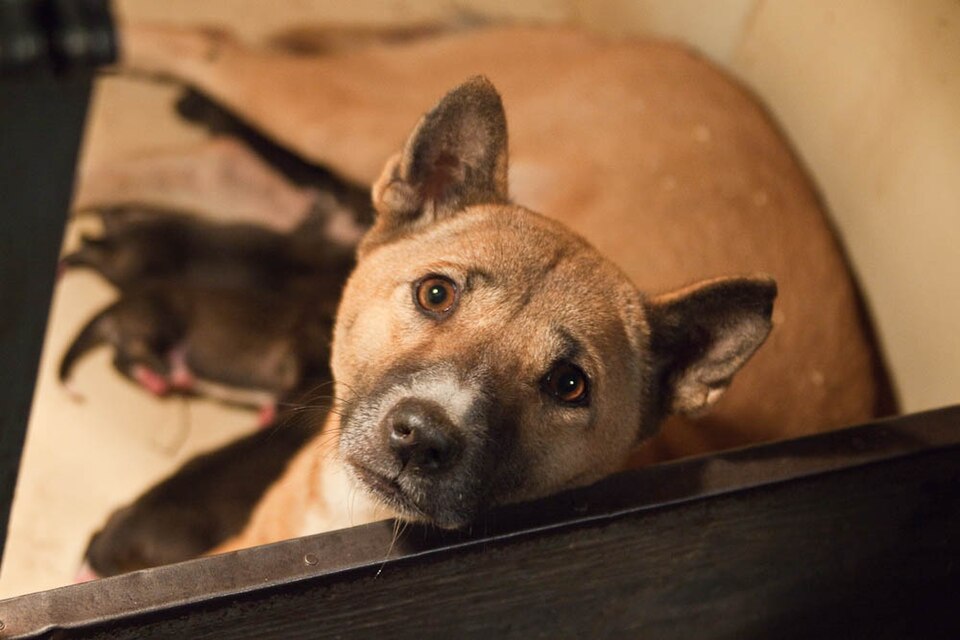
Photo: File:Mother New Guinea Singing Dog with litter of puppies.jpg by Oldsingerman20, CC0 via Wikimedia Commons. Believe an image infringes your rights? Report it — we remove within 24 h.
Eight weeks is the widely accepted minimom — and it is a minimom, not a target. The last weeks with the litter teach bite inhibition and dog-to-dog manners that are hard to teach later.
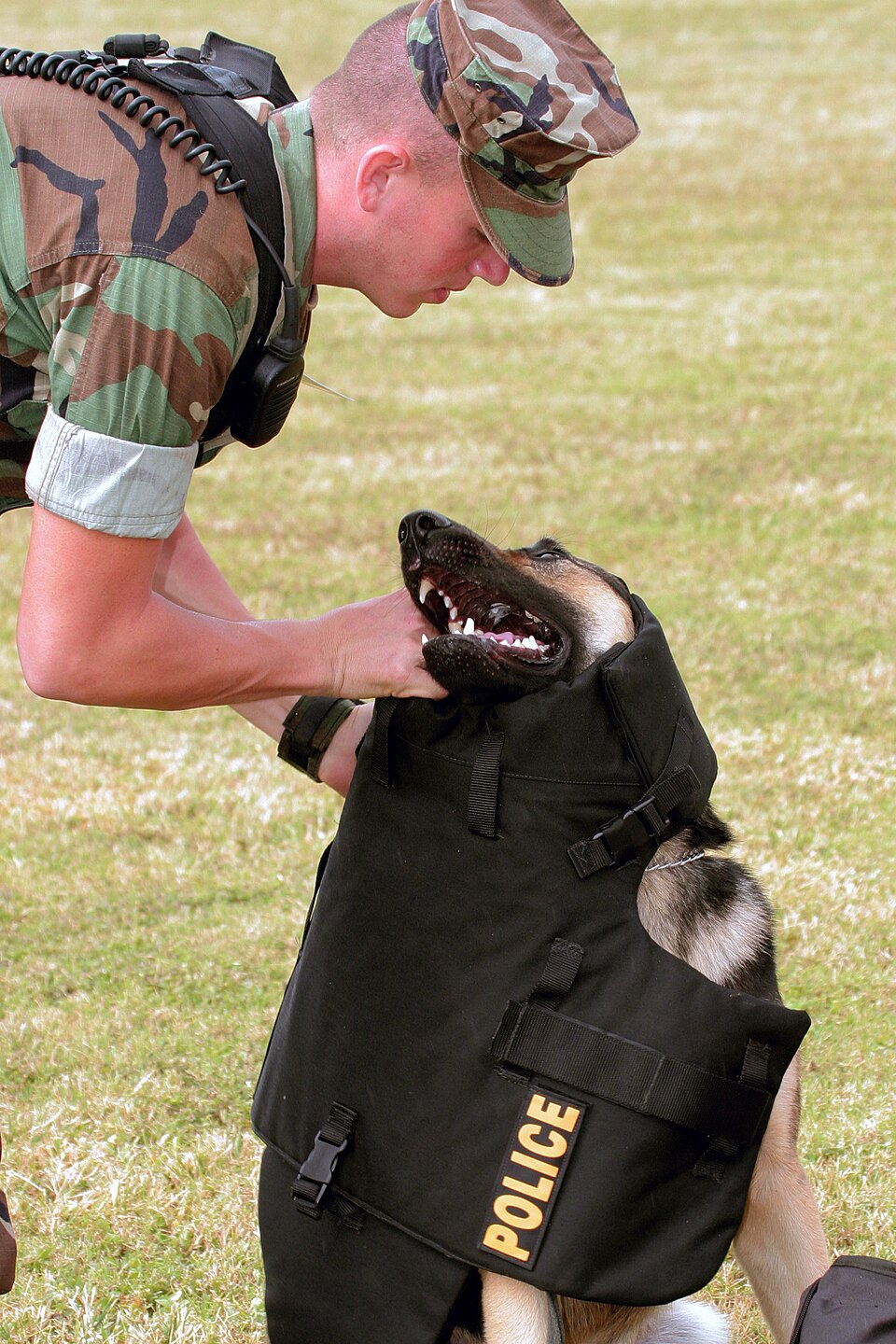
Photo: File:US Navy 040329-N-3228G-013 Master-at-Arms 3rd Class Eliot Fiaschi dresses "Arpi" a German Shepard Military Working Dog (MWD) in body armor prior to a demonstration.jpg by U.S. Navy photo by Photographer’s Mate 1st Class William R. Goodwin., Public domain via Wikimedia Commons. Believe an image infringes your rights? Report it — we remove within 24 h.
Under the ADA, a service dog is defined by the task they perform for a disability — not by a certificate, a registration or a vest you can buy online.
How to use these guides
Every guide is built the same way: the honest answer in the first two sentences, the step-by-step plan, the realistic timeline, the mistakes that make it worse, and the red flags that mean a vet visit instead of a training session. Sources are listed at the bottom of each page with the date we checked them.
Coming next in this series
Queued by real search demand:
How to stop a dog from bitingHow to stop a dog from jumping on peopleHow to teach a dog to come when calledHow to stop separation anxietyHow to stop a puppy biting hands and ankles