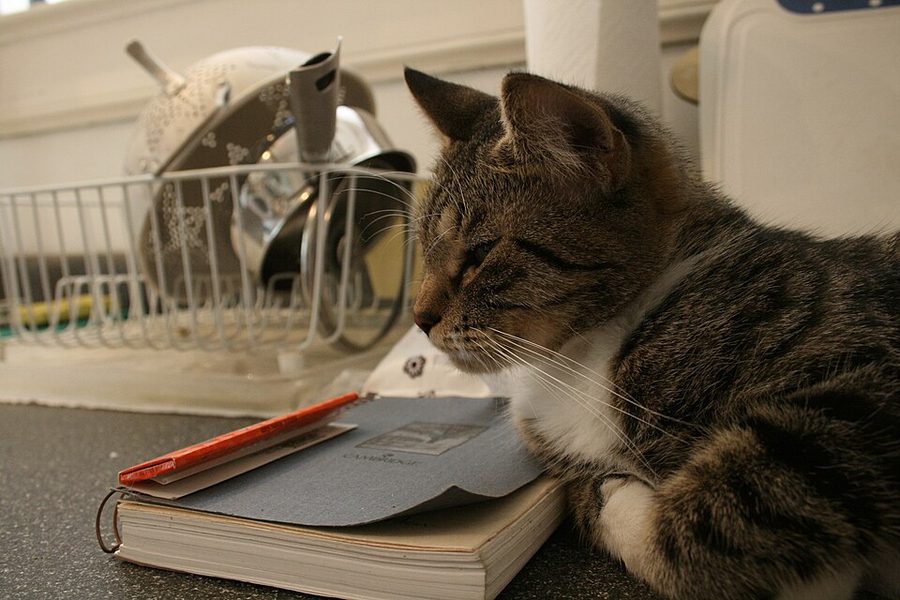
Why they jump — and what rewards it
Counters are warm, high, and full of interesting smells; jumping is self-rewarding. Yelling or spraying water might stop the moment you're there but teaches the cat to wait until you leave. Consistent environmental change works better than confrontation.
Make counters boring, perches better
Keep food and dirty dishes off the counters so there's nothing to gain. Use double-sided tape or a motion-activated deterrent on the edge as a temporary discouragement. At the same time, give a cat tree or wall shelf at a similar or better height near the kitchen, and reward them for using it. A cat with a legitimate high spot of their own is far less interested in yours.
Consistency beats confrontation
Everyone in the home has to apply the same rules, or the cat learns 'sometimes.' Pair the lost reward with a reward for the right spot, and the habit usually shifts within a couple of weeks.
Frequently asked questions
How do I keep my cat off the kitchen counters?
Remove the reward (no food, no dirty dishes up there), make the edge unappealing with double-sided tape, and give a better cat tree or shelf nearby that you reward them for using.
Does spraying water stop counter jumping?
It may stop it while you're present, but it teaches the cat to wait until you leave and can damage trust. Environmental change plus a better perch works better.
Why does my cat only jump on counters when I'm not home?
Because the counters are still rewarding and there's no consistent deterrent. Make them consistently unrewarding and offer a better perch.
More cat training guides
- How to Litter Train a Cat — and Fix It When They Stop
- How to Stop a Cat From Scratching Furniture (Without Declawing)
- How to Stop a Cat From Biting — Play Bites and Fear Bites
- How to Walk a Cat on a Leash — Harness Training Step by Step
- How to Train a Cat to Come When Called (Recall)
- How to Train a Cat to Sleep at Night (and Stop the 3 a.m. Zoomies)
- How to Clicker Train a Cat — Positive Reinforcement That Works